
What is the gut-brain axis and why does it matter?
World Mental Health Day gives us all an opportunity to talk openly about the many factors that can influence our mental wellbeing, from sleep and exercise to social connection and managing stress.
But there’s another connection worth exploring that doesn’t immediately spring to mind: the relationship between our gut and our brain. Though our gut isn’t the first thing we think of when discussing mental wellbeing, research suggests that it actually plays an important role in supporting overall health and wellbeing. Known as the gut-brain axis, this two-way communication channel explains the complex and intricate relationship between the gut and brain.
What is the gut-brain axis?
A way to picture the gut-brain axis is a continuous conversation between your gut and your brain, often referred to as the gut-brain connection. This conversation is made up of a network of nerves, hormones and chemical signals constantly exchanging information.
The communication works both ways. Our brain can influence what happens in our gut, and signals from the gut may also affect how we feel and function.
For example, when anxious or stressed, your brain signals to your gut which can then flare up digestive symptoms. You may have experienced this connection yourself without even realising it. Losing your appetite when stressed or feeling ‘butterflies’ when nervous are everyday examples of how your gut and brain are in constant contact.
Listen to your gut
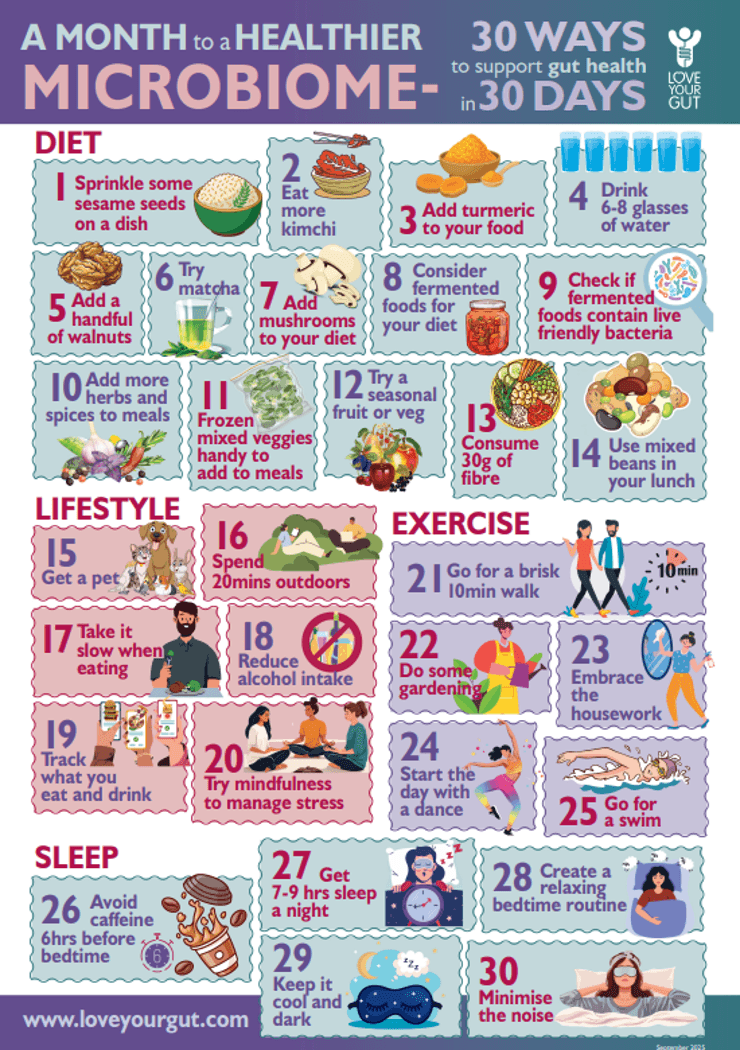
The gut-brain axis is just one part of the relationship between gut health and mental health. Looking after your gut can sit alongside the everyday habits that help support both your physical and mental health.
Eat a varied diet
Research suggests that what we eat may play a role in our mood and mental wellbeing [1]. Eating a healthy, balanced diet made up of fruits, vegetables, proteins, wholegrains, healthy fats and carbohydrates is important for supporting the gut-brain axis, adding diversity to your diet and helping gut bacteria to thrive. Following a Mediterranean diet has also been associated with a lower risk of depression [2].
Prioritise sleep
Sleep is crucial for supporting the gut-brain axis. Sleep disruption can affect the body’s internal clock and may also influence the balance of bacteria in the gut. [3] So, focusing on getting enough quality sleep a night can help support gut bacteria. Aim for a consistent 7 to 9 hours per night to support the body’s daily recovery.
Keep moving
Regular movement is a great way to contribute to improving your gut health and mood. Whether it’s a daily walk, a gym session or dancing, research suggests exercise is shown to increase the diversity and growth of bacteria in the gut[4]. Finding activities you enjoy can make it easier to build a consistent routine and stay active in the long term.
Manage stress where you can
Although stress is a normal part of life, long-term stress can affect both the mind and the gut. Stress can affect gut motility and may contribute to digestive symptoms such as constipation or diarrhoea.[5] Small habits such as taking regular breaks, spending time outdoors or practising mindfulness can help keep your gut and brain happy and manage day-to-day stress.
The gut instinct
The gut-brain axis is a fascinating area of research but there’s still so much to learn. Researchers are continuing to investigate how the gut-brain axis may influence areas such as mood, stress resilience and cognitive function, making it one of the most exciting areas of gut health research today.
It’s clear that looking after your gut isn’t a replacement for other forms of mental health support, but eating well, staying active, getting quality sleep and managing stress are all habits that can contribute to a healthier routine. World Mental Health Day is a reminder that wellbeing isn’t about one big change. Looking after your wellbeing often comes down to the everyday choices we make consistently.
To now find out how your gut and skin are connected click here.
References:
1 Huang Q et al. (2019) Linking What We Eat to Our Mood: A Review of Diet, Dietary Antioxidants, and Depression. Antioxidants, 8(9): 376
2 Lassale C, Batty GD, Baghdadli A, et al. Healthy dietary indices and risk of depressive outcomes: a systematic review and meta-analysis of observational studies. Mol Psychiatry. 2019;24(7): 965-986. doi: 10.1038/s41380-018-0237-8
3 76. Hirotsu et al. (2015) Sleep Sci 8(3): 143-152.
- Withrow et al. (2021) Curr Opin Endocr Metab Res 17: 26-37.
4 Mailing LJ, Allen JM, Buford TW, Fields CJ, Woods JA. Exercise and the Gut Microbiome: A Review of the Evidence, Potential Mechanisms, and Implications for Human Health. Exerc Sport Sci Rev. 2019;47(2):75-85. doi:10.1249/JES.0000000000000183
5 75. Leigh et al. (2023) J Physiol 601(20): 4491-4538.