
The Power of Beans
As a budget-friendly and versatile pantry staple, beans can play an important role in supporting our gut and overall health. Whether they’re baked, kidney, or cannellini, beans are rich in key vitamins and minerals. Keep reading to discover why beans deserve a regular place on your plate, and how to easily enjoy more of them!
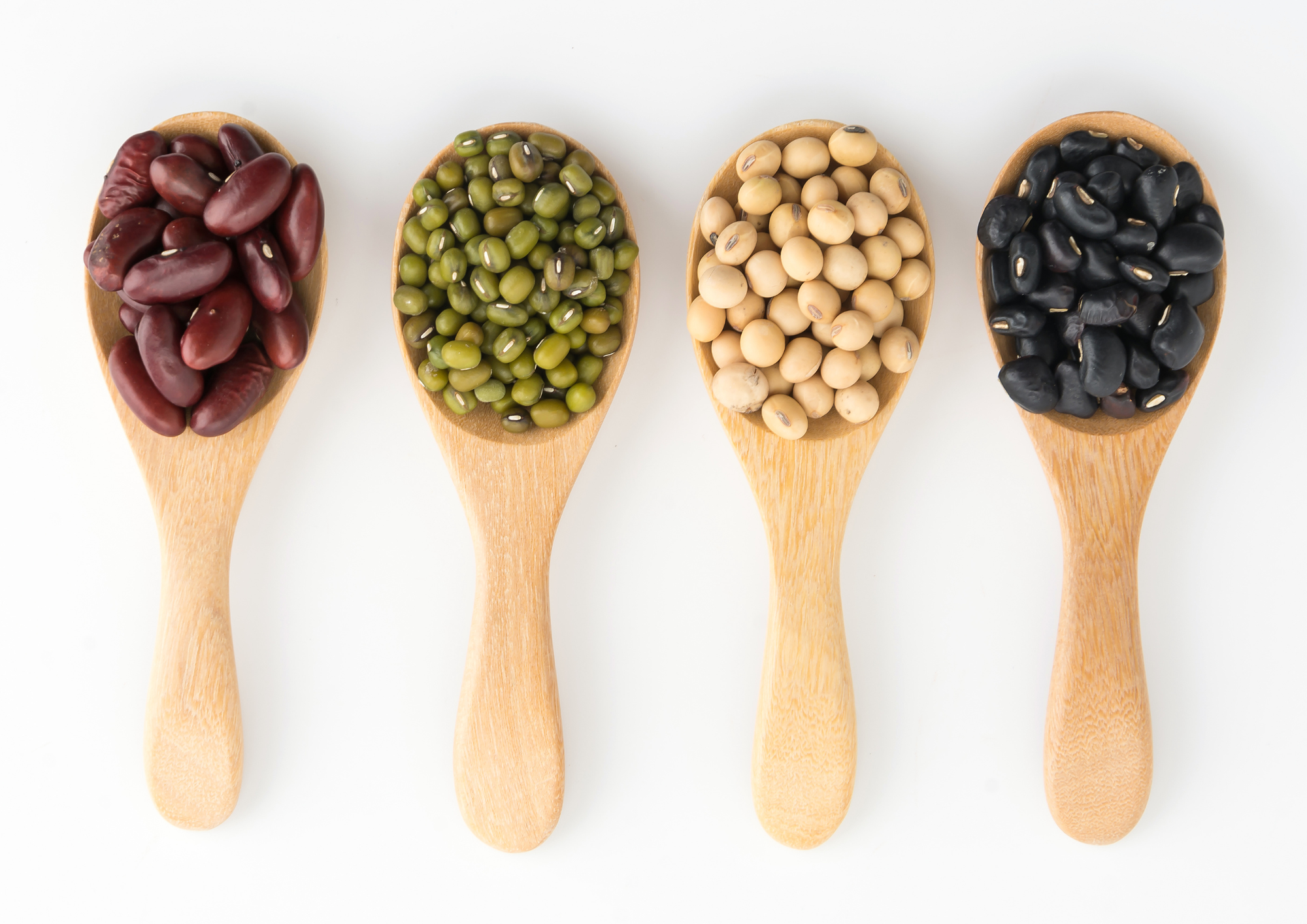
That Actually is a Bean?
Simply put, beans are the seeds of flowering plants belonging to the legume family. They’re tiny nutritional powerhouses packed with plant-based protein, essential vitamins, and minerals, but their real superpower lies in their fibre content1.
Beans contain both soluble and insoluble fibre. When you eat beans, soluble fibre absorbs water and can form a gel-like substance in your gut, helping to slow digestion. Meanwhile, insoluble fibre adds bulk to your stools, helping food move through your digestive system and keeping your bowel movements regular. 2
Beans and Gut Health
Beans also contain something called resistant starch. While your body digests most food higher up in the digestive tract, resistant starch survives the journey all the way down to your colon.
Once there, it acts as a feast for your good gut bacteria!s your microbes ferment this fibre, they produce beneficial compounds called short-chain fatty acids (SCFAs).3 These SCFAs are important for gut health: they provide energy to the cells lining your gut, help maintain a strong gut barrier, and even play a role in supporting your immune system.4
Plus, eating a variety of different beans can support different types of beneficial bacteria in your gut. The more diverse your gut bacteria, the better! Eating a varied diet helps to support this diversity and contributes to a healthy gut.
Did you know?
- Most beans are considered a high-fibre food: Any food containing 6g or more per 100g is considered a ‘high fibre’ food. This means many beans, including kidney beans, black beans, cannellini, black-eyed beans, butter beans and pinto beans, fit this category.
- We are a nation of haricot bean lovers: Unsurprisingly, in the UK, haricot beans (the beans used in baked beans) are by far the most commonly eaten, making up 37% of adult bean intake and a huge 53% for children.1
Top Tips
- Branch out: There’s no need to ditch the classic baked beans, but since your gut microbes thrive on variety, why not keep a few different tins in the cupboard? Butter beans are creamy in stews, black beans work well in wraps and cannellini beans can be easily blended into soups.
- The half-and-half trick: Try replacing half the minced meat in your favourite chilli or bolognese for a tin of kidney or black beans. It makes the meal cheaper, adds fibre and tastes delicious!
- Soak your beans: Soaking dried beans overnight helps to reduce compounds that can cause digestive discomfort, making them easier to digest.5
- Start small: Just like with any high-fibre food, if you’re not used to eating beans, introduce them gradually. This gives your gut microbes time to adapt and can help prevent unwanted bloating or gas.6
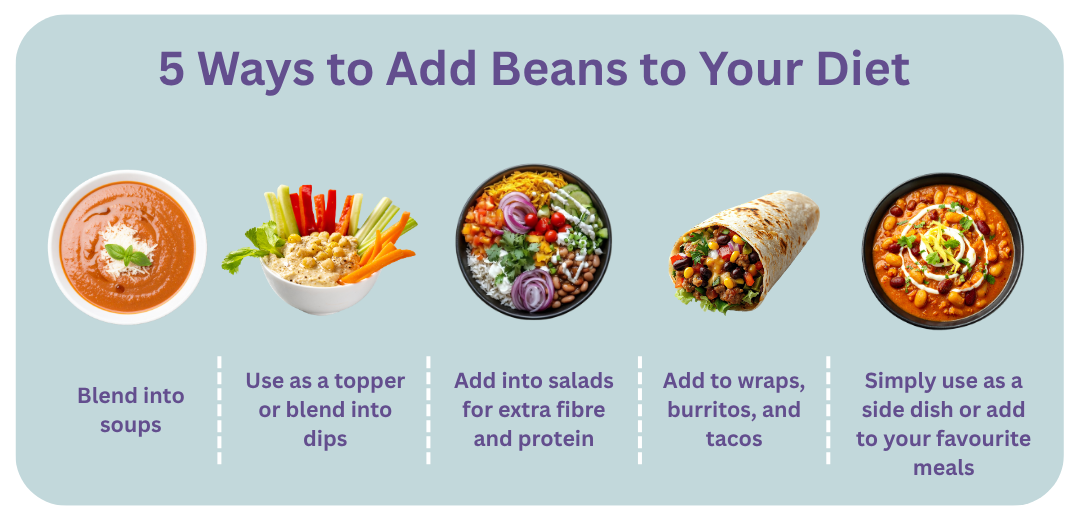
See our Love Your Gut bean recipes:
- One-pot chicken, leek & spinach lasagne with bean bechamel
- Smokey beans topped with feta cheese & coriander
- Mexican chicken & black bean chilli
References
- The Food Foundation (2025) Beans Facts. Available at: https://foodfoundation.org.uk/sites/default/files/2025-10/TFF_Beans%20Facts_DIGITAL_0.pdf
- Guts UK (2026) Fibre. Available at: https://gutscharity.org.uk/advice-and-information/health-and-lifestyle/fibre-information/
- Kadyan et al. (2022) Nutrients, 14(9), p.1726
- Liu et al. (2023) Frontiers in Immunology, 14, 1186892
- McKenna (2025) Soaking beans: key to better digestion. Available at: https://btbwithmckenna.com/2025/04/19/soaking-beans-key-to-better-digestion/
- Ioniță-Mîndrican et al. (2022) Nutrients, 14(13), p.2641